A standard seven-night ocean cruise delivers an effortless way to sample multiple coastal destinations in a single week. However, the inherent pace of cruising—arriving in port at 7:00 AM and rushing back to the gangway by 4:30 PM—often leaves travelers feeling as though they have only skimmed the surface of world-class regions like the Italian Riviera, the Alaskan interior, or the Caribbean coastline.
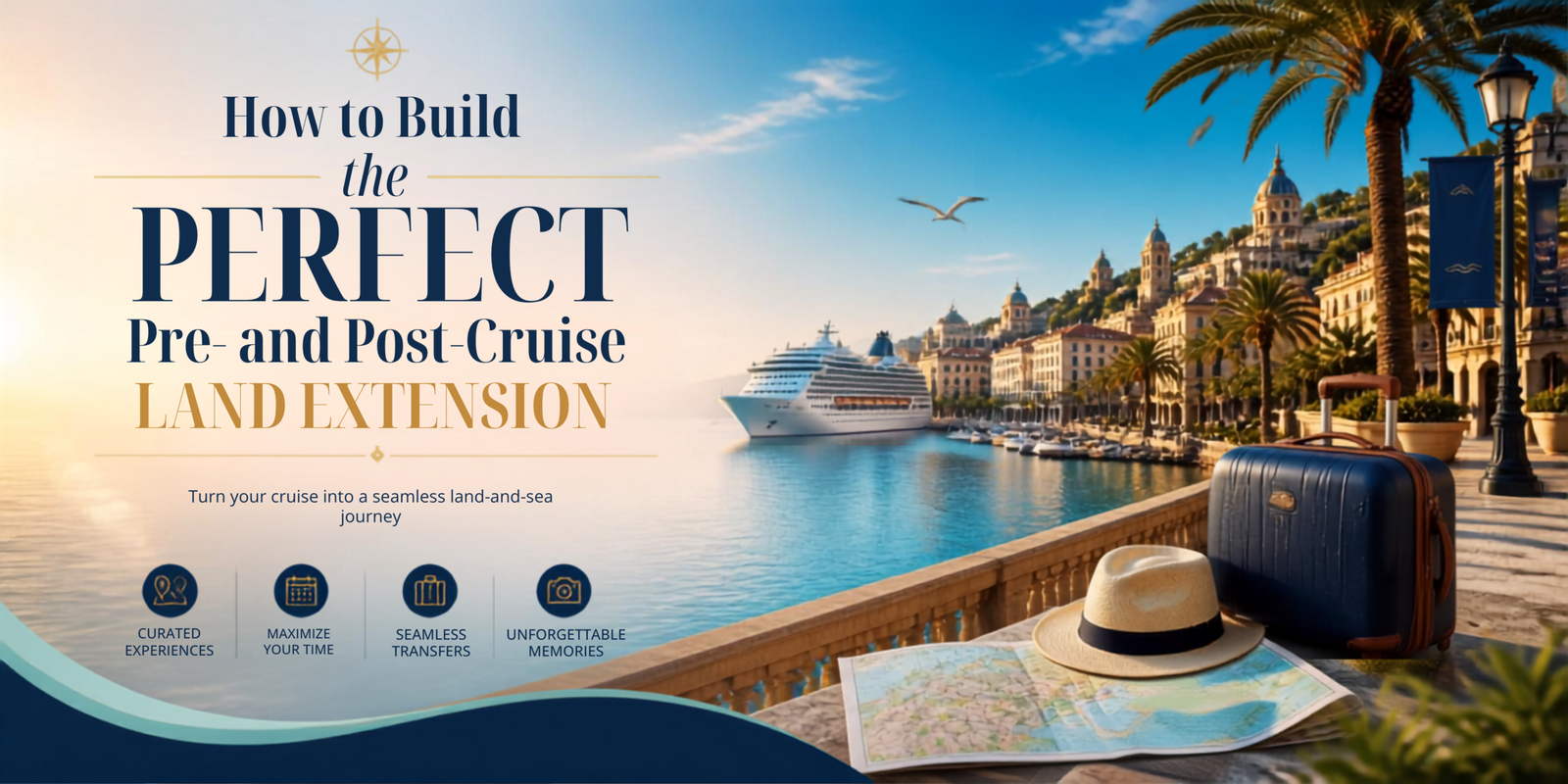
This operational limitation has driven the massive rise of the “Land & Sea” or “Cruise & Stay” strategy. By intentionally pairing an ocean or river sailing with a multi-day, self-contained land extension before embarkation or after disembarkation, you transform a standard port-hopping itinerary into an immersive, bucket-list holiday.
Executing a flawless land-and-sea vacation, however, involves complex timing. A single delayed train transfer, a misplaced hotel luggage deposit, or an improperly scheduled flight can cause you to miss your ship’s non-negotiable departure window.
This master guide delivers the exact logistical framework, flight timing strategies, and port-specific blueprints required to build a stress-free pre- or post-cruise land extension.
Why Extend Your Cruise Vacation?
Adding a 2- to 4-night land package to your cruise itinerary is far more than just adding days to a trip; it serves as a critical buffer that protects your entire financial investment.
1. The Operational “Flight Anxiety” Shield
In an era of frequent airline delays, crew shortages, and winter weather ground stops, flying into a port city on the exact morning of your cruise departure is the single highest-risk gamble in travel. Ships operate on strict maritime schedules and will not hold the gangway for delayed commercial flights. Arriving 48 to 72 hours early completely eliminates this stress, ensuring that even if your airline loses your luggage or delays your connection, you have ample time to recover before the ship sails.
2. Overcoming Jet Lag Before Stepping Onboard
International long-haul flights across multiple time zones leave travelers physically exhausted. If you fly directly onto a ship, you spend the first three days of your paid cruise vacation asleep by 7:00 PM and wide awake at 3:00 AM, missing out on evening shows and fine dining. Spending two nights in a boutique land hotel allows your circadian rhythm to adjust, so you step onto the ship fully refreshed and ready to enjoy every amenity on day one.
3. Experiencing Key Port Cities Beyond the 8-Hour Window
World-class departure hubs like Barcelona, Rome (Civitavecchia), Anchorage, Tokyo, and Sydney cannot be properly experienced in an eight-hour shore excursion window. A pre- or post-cruise hotel stay grants you the freedom to explore landmark museums after hours, enjoy authentic local dinners late into the night, and absorb the culture without constantly checking your watch for the ship’s all-aboard call.
Structural Timing Rules: The Pre- vs. Post-Cruise Framework
Deciding whether to place your land extension before or after your sailing depends heavily on your destination, flight paths, and personal travel style.
The Pre-Cruise Strategy: The Stress Buffer
Placing your land extension before the cruise is ideal for long-haul, international itineraries (e.g., European Mediterranean, Asian, or South American sailings).
- The Workflow: You arrive at your destination port city, check into a central hotel, and spend two or three days walking the city, sampling local restaurants, and adjusting to the time zone.
- The Transition: On embarkation day, you take a short 30-minute private transfer from your hotel directly to the cruise terminal, stepping onto the ship fully rested and completely stress-free.
The Post-Cruise Strategy: The Extended Exploration
Placing your extension after the cruise works best for adventure-heavy or land-tour-intensive regions like Alaska, Japan, or Northern Europe.
- The Workflow: You complete your 7-night ocean sailing first, enjoying the relaxing rhythm of sea days and onboard pampering. Upon disembarkation, you rent a car or take a high-speed train deeper into the country’s interior (e.g., taking the Alaska Railroad from Whittier up to Denali National Park).
- The Advantage: You don’t have to worry about ship departure deadlines during your land tour, allowing you to stay out late and explore remote inland destinations at your own pace.
Flight & Ground Transit Optimization
The greatest point of failure in a land-and-sea itinerary occurs during the transfers between airports, hotels, and cruise terminals. Mastering these connections requires precise timing.
The 48-Hour Airfare Savings Hack
Shifting your international flights by 48 to 72 hours away from the standard cruise departure days can result in significant airfare savings. Because thousands of cruisers fly into port cities on the exact day a ship docks (typically Fridays, Saturdays, and Sundays), airfare prices spike dramatically on those specific days.
By flying in on a Tuesday or Wednesday for a pre-cruise stay, you can often save enough money on your airline tickets to completely cover the cost of a luxury boutique hotel stay in the city center.
Train vs. Private Shuttle Transfers
When connecting your land hotel to the cruise port, choose your transportation carefully based on your destination:
- European High-Speed Rail: In regions like Italy or Spain, high-speed rail networks (like Frecciarossa or AVE) connect city-center hotel districts directly to port cities (e.g., Florence to Rome, or Madrid to Barcelona) in under two hours. Always book first-class or business-class train seats when traveling with large cruise luggage to guarantee dedicated luggage rack access.
- Private Port Shuttles: In destinations where ports are located far from city centers—such as Civitavecchia (1 hour from Rome) or Seward/Whittier (2 to 3 hours from Anchorage)—avoid public buses. Work with your travel advisor to schedule a private driver. A private transfer provides door-to-door service directly from your hotel lobby to the cruise terminal check-in desk, handling all heavy luggage seamlessly.
Land & Sea Logistics Matrix for Major Global Cruise Hubs
| Departure Port | Distance from City Center | Best Land Extension Strategy | Recommended Ground Transit |
| Miami / Fort Lauderdale (USA) | 10 – 20 Minutes | Pre-Cruise: 2 nights in South Beach or Las Olas Boulevard. | Rideshare (Uber/Lyft) or Hotel Shuttle. |
| Civitavecchia / Rome (Italy) | 60 – 90 Minutes | Pre-Cruise: 3 nights in Rome historical center (Pantheon/Colosseum). | Private Car Service or Direct Regional Train. |
| Barcelona (Spain) | 15 Minutes | Pre-Cruise: 2 nights in Gothic Quarter or Eixample. | Official Port Taxi or Private Van Transfer. |
| Anchorage / Seward (Alaska) | 2.5 to 3 Hours | Post-Cruise: 3-5 nights inland tour to Denali National Park. | Alaska Railroad (GoldStar Glass-Dome Train). |
| Yokohama / Tokyo (Japan) | 45 – 60 Minutes | Pre- or Post-Cruise: 3 nights in Shinjuku or Ginza. | Narita/Haneda Express or Private Limousine Bus. |
The Step-by-Step Execution Sequence
To build a land-and-sea vacation without falling into common timing traps, follow this three-phase planning process:
1.Lock In Your Core Cruise Itinerary:Phase 1: Anchor the Sailing.
Secure your cruise stateroom first. Note the exact dates, embarkation times, and final disembarkation ports. Verify whether your sailing is a round-trip route (e.g., starting and ending in Barcelona) or an open-jaw route (e.g., starting in Vancouver and ending in Anchorage), as this dictates your flight framework.
2.Select and Reserve City Center Hotels:Phase 2: Build the Land Shell.
Choose a centrally located hotel in your start or end port city. Prioritize hotels that offer 24-hour front desk service, luggage storage after check-out, and walkable access to major attractions. Avoid airport hotels; staying near the airport leaves you isolated from the city’s culture and dining.
3.Schedule Transfers and Lock In Flights:Phase 3: Connect Ground & Air.
Book your flights with a 48- to 72-hour buffer. Next, arrange your ground transfers between the airport, hotel, and ship. Ensure your hotel-to-port shuttle is scheduled to arrive at the cruise terminal mid-day during your assigned boarding window, allowing you to walk straight onboard with zero wait times.
Summary
The Cruise & Stay strategy is the ultimate way to elevate a standard vacation into a rich, bucket-list journey. By adding a 2- to 4-night land extension before or after your cruise, you protect your trip against flight disruptions, overcome international jet lag, and enjoy a much deeper connection to your destination.
Lock in your sailing first, fly in early to save on airfare, and let a professional travel advisor handle the transit logistics so you can enjoy the best of both worlds—on land and at sea.