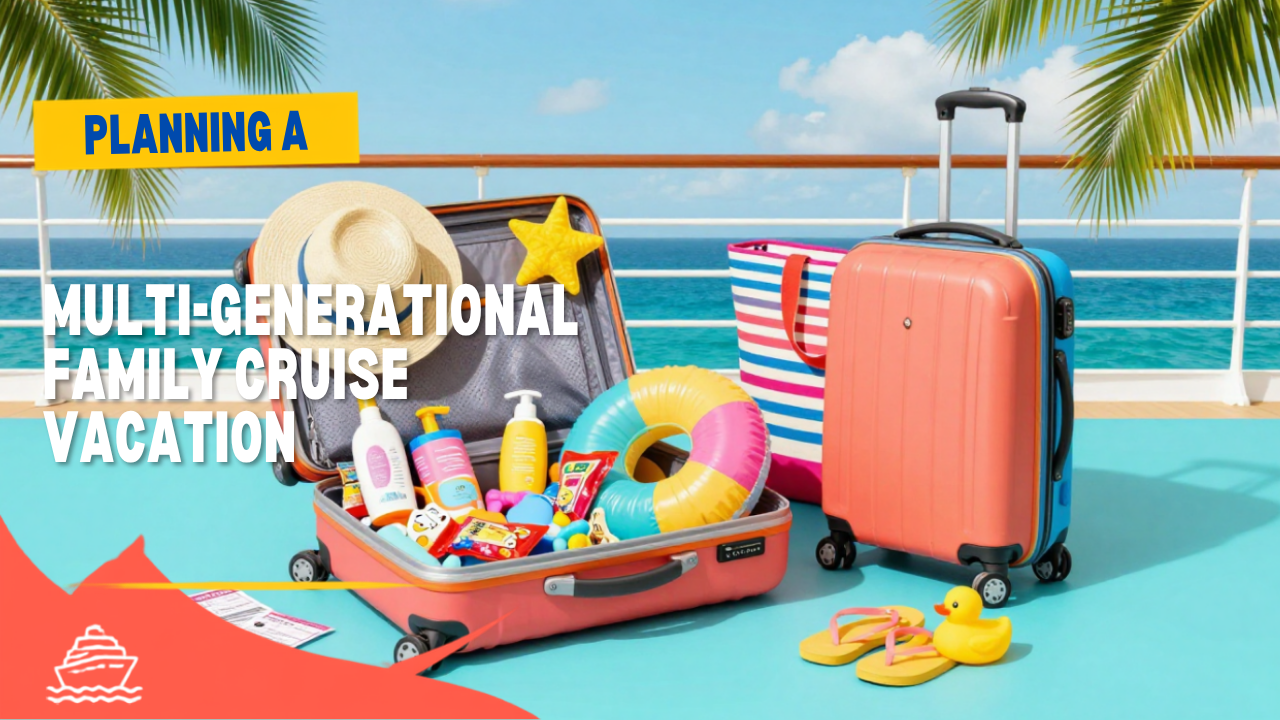
The Complexity of the Multi-Age Cruise Vacation
The Multi-Generational Travel Conundrum
Coordinating a modern family holiday is inherently complex, but attempting to design a trip that spans three distinct generations multiplies the logistical friction exponentially. The core dilemma rests on a foundational paradox: how do you simultaneously satisfy the high-energy, boundary-pushing desires of a tech-savvy teenager, the strict nap-time routines of a toddler, and the accessibility, fine-dining, and relaxation demands of aging grandparents?
When families turn to traditional land-based choices—such as renting an oversized beach estate or booking a massive all-inclusive resort—they inevitably run directly into localized logistical fatigue. Someone is always stuck playing the role of the default coordinator, fighting to secure twenty-person restaurant reservations, managing rental car keys, or mediating arguments over which activity to pursue next. The dream of cross-generational family bonding quickly fractures into separate, isolated sub-groups chasing disparate schedules across a spread-out property, all while incurring substantial hidden auxiliary costs.
The Cruise Solution: A Unified Moving Resort
An ocean cruise elegantly solves this spatial puzzle, functioning as a synchronized, self-contained moving resort that scales dynamically to individual preferences. For families seeking the highest possible operational return on investment, a multi-generational family cruise vacation stands as the definitive travel solution.
The genius of modern maritime architecture lies in its ability to provide vertical, localized separation without geographic fragmentation. On a singular vessel, grandparents can spend a quiet morning enjoying a premium enrichment lecture or lounging in an adults-only glass solarium, while grandchildren are securely checked into high-tech youth clubs just two decks away. In the evening, the entire party easily reunites at a singular, grand dining table to share stories of their independent adventures. By removing the daily friction of transit, meal coordination, and activity compromises, cruising allows families to focus strictly on shared experiences. This master guide delivers the exact strategic blueprint required to analyze major fleets, select optimal stateroom grids, and orchestrate seamless group logistics.
Fleet Analysis: Direct Cruise Line Comparisons for Large Families
Selecting the right cruise line is the most critical decision of the group planning process. If you book an active, high-octane ship for a family that craves quiet luxury, or a sedate, traditional vessel for a group packed with restless teenagers, the vacation dynamic fails. The industry’s leading family-focused fleets feature distinct operational philosophies tailored to specific multi-generational profiles.
Royal Caribbean International: The High-Octane Innovator
Royal Caribbean specializes in jaw-dropping, resort-style scale designed to conquer multigenerational boredom through relentless innovation. Across their massive Oasis-class and flagship Icon-class vessels—including recent arrivals like Star of the Seas and Legend of the Seas—the fleet uses a “neighborhood” design concept to segment diverse experiences. This layout intentionally isolates high-energy zones from quiet enclaves, preventing noise from bleeding across public spaces.
- The Youth & Teen Edge: Children and teenagers have access to record-breaking waterparks, surf simulators, escape rooms, and the SeaPlex indoor sports complexes.
- The Grandparent Retreat: Older travelers are treated to high-end Broadway-scale theatrical productions, ice-skating spectacles, and the Solarium—a climate-controlled, adults-only forward sanctuary wrapped in glass that offers stunning panoramic ocean views.
- Recent Fleet Amplifications: To keep the rest of the fleet highly competitive, Royal Caribbean’s extensive “Royal Amplified” dry dock program introduces next-generation venues like The Pesky Parrot tiki bar, expanded Casino Royale footprints, and fresh Izumi Teppanyaki layouts across favored platforms like Ovation of the Seas and Harmony of the Seas.
This fleet is the absolute best fit for highly active, independent families who want an environment packed with big-city energy and endless entertainment variety.
Disney Cruise Line: Premium Nostalgia and Structural Ergonomics
Disney Cruise Line approaches family travel through the lens of immaculate storytelling, world-class guest service, and superior room ergonomics. Spanning generations from nostalgia-loving baby boomers to toddlers, Disney leans heavily on emotional connection, all while presenting an incredibly functional physical product.
- Rotational Dining System: Disney’s standout group asset is their specialized dining layout. Your family rotates through three distinct, themed restaurants over the course of the cruise (such as the Marvel-infused Worlds of Marvel or the live-music spectacle Pride Lands: Feast of the Lion on the new Disney Destiny). Crucially, your dedicated waitstaff moves from restaurant to restaurant alongside your family, memorizing the grandparents’ favorite wine pairings and the toddlers’ specific cutting preferences by night two.
- Youth Immersion vs. Adult Seclusion: While children are fully immersed in next-generation spaces like the Oceaneer Club, adults hold keycard-exclusive access to premium adult pools and upscale lounges like the Doctor Strange-inspired Sanctum.
- Global Footprint Expansion: The fleet continues to expand its reach, highlighted by the massive Disney Adventure homeporting permanently in Singapore to bring Disney’s signature family-first framework to Asia.
Disney represents the gold standard for households traveling with toddlers and infants who require highly structured schedules, exceptional youth staff, and accessible, theme-park-style luxury.
Celebrity Cruises: Upscale, Relaxed Sophistication
For families where the children are mature teenagers or adults, and the grandparents value visual art, wellness, and gourmet food over waterparks, Celebrity Cruises delivers a refined, contemporary alternative. Celebrity strips away the waterslides, character meets, and noisy announcements, replacing them with a boutique, design-forward aesthetic.
- The Retreat: This exclusive “ship-within-a-ship” enclave grants premium family members access to private sundecks, a dedicated lounge, and Luminae—a private restaurant featuring menus curated by Michelin-starred chefs. It provides an exceptional way for affluent grandparents to treat the family to a high-end experience while keeping a private sanctuary handy.
- Sophisticated Spaces: Public lounges are centered around high-design martini bars, relaxing sunset verandas, and outdoor lawn clubs carpeted with real growing grass. Entertainment trends away from loud spectacles and toward live acoustic acts, destination-led enrichment, and contemporary edge shows.
Celebrity is the ideal choice for adult-heavy multi-generational groups looking to slow down, share premium bottles of wine, and experience upscale destination immersion without the hyper-active crowds of standard mega-ships.
Stateroom Selection: Sanity, Proximity, and Privacy Mechanics
The Connecting Cabin Grid vs. The Luxury Suite Splurge
When managing multi-generational stateroom accommodations, planners often fall into the trap of assuming that a single, high-capacity suite is the only way to keep the family unified. While top-tier suites are visually spectacular, the numerical reality of shipboard architecture tells a different story. Booking two or three interconnecting standard cabins frequently delivers far higher functional value per dollar than a single mid-tier Family Suite.
Consider the layout math: a standard balcony stateroom averages roughly 180 to 200 square feet of indoor space. Squeezing five or six family members from different generations into one room—even a spacious one—means sharing a single marine bathroom and navigating a complex maze of pull-down Pullman beds and fold-out sofas every night.
By contrast, booking two connecting cabins via a private interior door instantly doubles your assets:
- Two full, independent bathrooms: This completely eliminates the morning bottleneck when grandparents and teenagers are trying to get ready simultaneously.
- Dual structural closets and matching storage areas: Keeps luggage out of high-traffic floor paths.
- A solid structural barrier: Allows parents or grandparents to close the connecting door at 8:30 PM for total silence while teenagers watch TV or get ready for night events next door.
For affluent groups looking to upgrade, the alternative is skipping mid-tier options entirely and targeting specialized family-first enclaves. Royal Caribbean’s Icon-class ships feature the Family Infinite Ocean View Balcony, which isolates a dedicated kids’ bunk nook from the main bed area.
If budget permits a true luxury splurge, ship-within-a-ship concepts like Norwegian’s The Haven or Celebrity’s The Retreat provide multi-bedroom villas that sleep up to eight guests. This structure offers a highly effective compromise: it gives affluent grandparents a way to host the entire extended family in an ultra-premium setting, complete with private lounges and butler service, while maintaining distinct bedroom walls for essential nighttime privacy.
Mapping Deck Proximity Strategies
The physical location of your cabins across the ship’s deck plans is just as critical as the room category itself. A common mistake is letting an automated online booking engine randomly assign stateroom numbers, which often scatters a family across different decks or opposite ends of a 1,100-foot vessel. For older family members dealing with joint pain or limited mobility, walking the length of three football fields just to meet the family for breakfast creates immediate daily friction.
To optimize accessibility, always target a synchronized midship room block positioned directly adjacent to the central elevator banks. This location acts as a central hub, minimizing horizontal walking distance.
Furthermore, aim for the “sandwich decks”—passenger stateroom decks that are bordered both directly above and directly below by other quiet cabin decks. This buffers your rooms from the late-night vibration of engine spaces below, or the early-morning sound of pool chairs being dragged across the deck above. Positioning your room block one or two decks below the main pool and buffet deck ensures that grandparents can ride an elevator for just 30 seconds to join the family, rather than embarking on a massive trek across the ship.
Group Dining Logistics: Navigating the Evening Gathering
Traditional Fixed Dining vs. Flexible My Time Dining
While a cruise allows everyone to pursue separate paths during the afternoon, dinner remains the emotional anchor of the multi-generational experience. It is the designated time for the family to gather, decompress, and bond. However, managing smooth service for a party of eight, twelve, or twenty requires choosing the right dining format.
Modern fleets offer two distinct dining formats: Traditional Fixed Dining (assigned to a specific table and time, usually 5:30 PM or 8:00 PM every night) and Flexible/Open Seating (where you show up whenever you want). For multi-generational groups, Traditional Fixed Dining is the definitive choice.
The reasons to prioritize fixed dining are highly practical:
- Eliminating Wait Times: Showing up at a main dining room with a party of ten during peak hours under a flexible system guarantees long wait times while the staff scrambles to push tables together. Fixed traditional dining ensures your large table is fully set and waiting for you the exact second you arrive.
- Waitstaff Continuity: Under traditional seating, you keep the exact same waiters for the entire cruise. By night two, your staff memorizes your family’s specific quirks: they will have highchairs pre-staged for toddlers, ensure the grandparents’ favorite vintage of wine is uncorked ahead of time, and pace the meal perfectly so restless children aren’t forced to sit through a three-hour marathon.
Linking Cross-Cabin Reservations
Securing a singular large table for an extended family requires precise backend coordination. Even if you book your cabins at the exact same time, the cruise line’s digital reservation system treats each room as an independent entity. If left unlinked, your family will be scattered across entirely different corners of a multi-tiered dining room.
To prevent this, you must explicitly link all cross-cabin reservation numbers within the cruise line’s global reservation system. This step creates a secure digital handshake between the accounts. While this can be done manually by calling the line’s phone center with every passenger’s individual booking code, utilizing a dedicated cruise travel advisor completely automates this process.
An advisor can access the agency console to tether the bookings, submit formal table-size requests directly to the ship’s Maitre D’ two weeks prior to sailing, and verify that the table’s physical location accommodates any family mobility needs, such as clearance for a wheelchair or scooter near the dining room entrance.
The Multi-Age Day: Balancing Togetherness and Independence
Youth Programs and Senior Sanctuaries
The core secret to a successful multi-generational cruise is recognizing that an exceptional family vacation does not require being glued together for twenty-four hours a day. In fact, forced togetherness across wide age gaps is the quickest path to travel friction. Modern cruise ship design relies on a brilliant concept of structured spatial separation: engineering dedicated, age-segregated zones that allow different generations to thrive in their native elements, completely independent of one another.
For children and teenagers, these spaces are highly interactive, secure youth hubs. Royal Caribbean’s Adventure Ocean and Disney’s Oceaneer Club divide kids by precise developmental ages (e.g., ages 3–5, 6–8, and 9–11) to deliver tailored, counselor-led programming. Teenagers are given their own card-key-access lounges, complete with gaming consoles, music stations, and private outdoor patios where they can socialize free from parental observation.
While the younger generation burns off energy on the upper decks, older family members can retreat to sophisticated sanctuaries deliberately positioned far away from the splash pads. Quiet observation lounges, wood-paneled libraries, and thermal suite spas offer peaceful environments for reading or relaxing.
The crown jewel of this design philosophy is the adults-only pool complex, exemplified by Royal Caribbean’s forward-facing Solarium. This glass-enclosed oasis features cascading whirlpools, cushioned loungers, and dedicated bar service, providing grandparents with a quiet haven to enjoy the ocean scenery in complete serenity.
Because these spaces operate concurrently, coordinating meetings throughout the day requires smart planning. Relying on cellular data at sea leads to exorbitant roaming fees, and walkie-talkies struggle to penetrate the ship’s heavy steel fire doors.
The most effective, free solution is utilizing the native smartphone apps provided by the cruise lines (such as the Royal Caribbean App or the Disney Cruise Line Navigator). These applications operate on the ship’s complimentary internal Wi-Fi network, featuring built-in group chat functions that allow family members to coordinate lunch pickups or afternoon meetups seamlessly without buying expensive satellite internet packages.
Shore Excursion Strategy: Choosing Inclusive Land Outings
When the ship drops anchor, the logistical challenge transitions from shipboard navigation to port-side mobility. Selecting shore excursions for a large group requires vetting tours against the physical thresholds of your oldest and youngest family members. A rigorous 4-mile walking tour of medieval cobblestone streets will quickly exhaust a toddler and prove impossible for a grandparent using a cane or scooter.
To maximize comfort and minimize stress, prioritize cruise line private islands (such as Royal Caribbean’s Perfect Day at CocoCay or Disney’s Castaway Cay) on your itinerary. These private enclaves are masterclasses in accessible family design. They feature:
- Zero bus-transit times: You step right off the ship’s gangway onto a paved pier.
- Complimentary tram networks: Accessible loops run continuously to shuttle guests from the ship directly to various beaches and waterparks.
- Built-in infrastructure: Standard setups include complimentary beachside buffets, paved walkways, and beach wheelchairs with oversized rubber tires provided at no extra cost.
If you are visiting standard cultural ports, avoid high-density bus tours that require rigid timelines. Instead, consider booking private van tours through your travel advisor, or focus on low-impact, modular activities like beach club day-passes or accessible boat tours where family members can remain comfortably seated while enjoying the views.
The Group Spend Matrix: Cross-Brand Evaluation
The upfront price tag of a multi-generational cruise can be highly deceptive. While one cruise line may look significantly cheaper at initial checkout, its a la carte upcharges can quickly cause the final onboard bill to surpass that of a more inclusive competitor.
The matrix below contrasts the financial, spatial, and structural realities of the top three family fleets to help you calculate the best overall value for your group’s budget.
| Features | Royal Caribbean International | Disney Cruise Line | Celebrity Cruises |
| Primary Demographic Fit | Children (4-12), Restless Teens, Active Adults | Toddlers, Infants, Theme Park Enthusiasts | Mature Teens, Multi-Gen Adults, Foodies |
| Standard Room Ergonomics | Compact (~165-180 sq ft); standard single bathroom footprints. | Spacious (~184-214 sq ft); Split-Bathroom design is standard. | Modern, upscale (~175-200 sq ft); features innovative glass enclosures. |
| Included Onboard Assets | Broadway plays, aqua shows, ice shows, main youth programs. | First-run Disney movies, deck parties, comprehensive nurseries. | Acoustic live music, fitness classes, high-design rooftop lawns. |
| A La Carte Upcharges | High; specialty dining, waterparks, and arcades incur extra costs. | Low; non-alcoholic sodas, room service, and character meets are free. | Moderate; specialty dining and thermal spas require extra fees. |
| All-Inclusive Packages | None standard; drinks and Wi-Fi must be purchased separately. | Partial; sodas and snacks are baked into the base cruise fare. | Available; All Included tier covers classic drinks and basic Wi-Fi. |
| Private Island Assets | Perfect Day at CocoCay (High-thrill slides & premium cabanas). | Castaway Cay / Lookout Cay (Pristine beaches & family bike trails). | Shares access to select Royal Caribbean private destinations. |
| Financial Group Reward | Tour Conductor Credits available for 8+ cabin blocks. | Limited group pricing; strictly tiered by seasonal demand. | Generous group blocks; custom onboard credits per cabin node. |
The 12-Month Group Booking Timeline
To transform a large multi-generational cruise concept into a flawless reality without incurring personal financial liability or endless organizational headaches, you must adhere to a strict structural timeline. Attempting to organize a high-occupancy group three or four months before sailing introduces severe inventory constraints, higher baseline costs, and scattered cabin assignments.
By deploying this systematic twelve-month timeline managed via your travel advisor’s professional dashboard, the entire reservation process runs seamlessly on autopilot.
1.Establish the Official Group Block:Month 12 to 10 Before Sailing.
Your travel advisor contacts the cruise line’s dedicated group operations desk to establish an official group block. This contract locks in a protective pool of inventory (minimum of 8 staterooms to qualify for group perks) at the prevailing baseline price. At this stage, you map out the target layout deck, isolating specific midship connecting nodes and proximity boundaries near elevator banks. Crucially, no personal names or individual credit cards are required to initially hold this inventory block.
2.Launch the Family Registration Wave:Month 9 to 6 Before Sailing.
Your advisor builds a dedicated booking portal link or direct phone pipeline for your family network. Individual sub-families call the agency directly to select their specific cabin preference from your pre-held block (e.g., grandparents booking a Central Park balcony, parents booking connecting oceanviews). Each independent household submits their own legal names, passport details, and individual deposit payments directly to the agency engine. This keeps the primary group leader 100% free from acting as an administrative intermediary or collecting cash.
3.Execute the First Inventory Review:Month 5 Before Sailing.
The cruise line’s group contract triggers a standard inventory audit milestone. Any unassigned cabins remaining inside your original held group block must be released back to the general public to prevent group penalty fees. Your advisor reviews the finalized headcount, officially links all individual booking numbers for uniform main dining room table placement, and verifies that accessibility needs or crib requests are formally stamped into the ship’s manifest.
4.Enforce the Final Payment Deadline:Days 90 to 75 Before Sailing.
The cruise line’s automated billing system requires final balances to be paid in full. Your advisor sends automated payment reminders across all linked households to process final credit card transactions. At this 90-day mark, the system automatically calculates your definitive Tour Conductor (TC) Credits based on your final paid double-occupancy stateroom count, allowing the resulting cash value to be applied directly to the group’s account layout.
5.Coordinate Boarding & Onboard Perks:Day 30 to Sailaway.
With all funds cleared, your advisor coordinates your group’s custom shipboard amenities. They submit formal requests for private family cocktail hours, pre-book large-group specialty dining nights before public windows open, and assist individual families with coordinating their check-in arrival windows via the cruise line smartphone app. When embarkation morning arrives, your entire multi-generational party steps onto the gangway with matching deck parameters, verified table assignments, and total operational peace of mind.
Common Pitfalls and Advanced Group Hacks
The Hidden Traps of DIY Group Booking
Orchestrating a multi-cabin family cruise independently via standard consumer websites introduced several silent administrative risks. The most frequent operational failure centers on promotional drop monitoring. When booking eight or more rooms, cruise lines require you to lock in pricing using standard or prevailing group rates. If a sudden public flash sale drops the individual rate three months later, an automated booking portal will not retroactively adjust your group’s inventory. You must actively cross-reference every cabin node to request a manual price matching adjustment from the line.
Furthermore, independent planners frequently run into flight delay buffer errors. If a single family segment within your group schedules their arrival flights for the exact morning of the cruise departure, a standard 2-hour mechanical delay can cause them to miss the ship’s strict gate closure. By working with a professional advisor, group travel protection policies and mandatory “Fly2Cruise” windows are managed systematically, ensuring that if one flight fails, the cruise line is legally obligated to transport that delayed family segment to the first international port of call.
The “Tour Conductor” Credit Hack
The single most lucrative financial asset available to multi-cabin family groups is the Tour Conductor (TC) Credit program. Most travelers are completely unaware that cruise lines automatically reward volume bookings with free berths.
The operational formula functions across a strict double-occupancy ratio:
This means that if your multi-generational group successfully fills eight separate double-occupancy cabins (16 total passengers), the cruise line will issue a full financial credit equivalent to the value of one entire cruise fare.
The specific value of this credit is calculated by averaging the baseline cruise fares across all staterooms booked within your group block. A skilled advisor leverages this hack to dramatically lower the total cost of the trip: they can apply the resulting cash credit directly back onto the grandparents’ stateroom invoice as a post-cruise refund, split the savings evenly to drop the price for all cabins, or convert the cash value into a massive pool of private onboard spending credit to pay for a group specialty dinner or a private family shore excursion.
FAQ
What is the best cruise line for a multi-generational family vacation?
Royal Caribbean International is the top choice for active family groups due to its revolutionary split-neighborhood ship design, which physically isolates high-energy youth attractions from adults-only sanctuaries. For families traveling specifically with toddlers or infants, Disney Cruise Line offers superior room layouts and rotational dining perks.
How do you link separate cruise reservations for group dining?
To link separate reservations, you must compile the individual booking confirmation numbers for each stateroom. Provide these codes directly to your travel advisor or the cruise line’s group booking desk to digitally tie the accounts together, guaranteeing uniform table assignments in the main dining room.
Are kids’ clubs included in the price of a family cruise?
Yes, access to the primary youth and teen programs on Royal Caribbean, Disney, and Celebrity is 100% complimentary and included in your base cruise fare. However, specialized late-night group babysitting services (typically active after 10:00 PM) and dedicated infant/toddler nursery care carry an hourly nominal fee.
Can a family of five fit into a standard cruise ship cabin?
While some modern standard oceanview and balcony staterooms feature pull-out trundles or drop-down Pullman beds to sleep five guests, it significantly compromises floor space. Booking two interconnecting standard cabins is frequently a more cost-effective strategy that automatically guarantees your family two full bathrooms and double the closet space.
Why should you use a travel advisor to book a large group cruise?
A travel advisor acts as your logistical coordinator, building out custom group blocks, linking cross-cabin reservations, and tracking structural price adjustments. They securely manage individual family credit card statements independently and unlock exclusive amenities like Tour Conductor credits or bonus onboard spending cash that corporate booking platforms pocket as profit.
Conclusion & Strategic Next Steps
From Logistical Chaos to Seamless Family Memories
Planning a multi-generational holiday does not have to be an administrative burden that drains your patience before the vacation even begins. The ocean cruise model represents the pinnacle of shared family travel, delivering the unique ability to offer specialized age-segregated adventures by day and intimate, grand family reunions by night. By choosing the correct fleet architecture, matching deck spaces near central elevator hubs, and securing traditional fixed dining tables, you build an environment where every single family member—from grandchildren to grandparents—can craft their own perfect holiday layout.
The ultimate group hack is realizing that the group leader should never act as an unpaid travel agent. Forcing yourself to track down your relatives’ legal passport spelling variants, manage separate credit card deposit dates, and resolve room disputes turns a celebratory milestone into an exhausting chore. By delegating the complex logistical framework to a certified cruise specialist, you protect your family’s financial assets and ensure a seamless experience from initial deposit to the final sailaway.
Ready to launch your family’s next great memory? Don’t fight the cruise line algorithms or wait on hold alone. Contact the group coordination desk at VistaOneTravels.com today to unlock your custom multi-cabin block and let a professional architect design your seamless vacation layout!